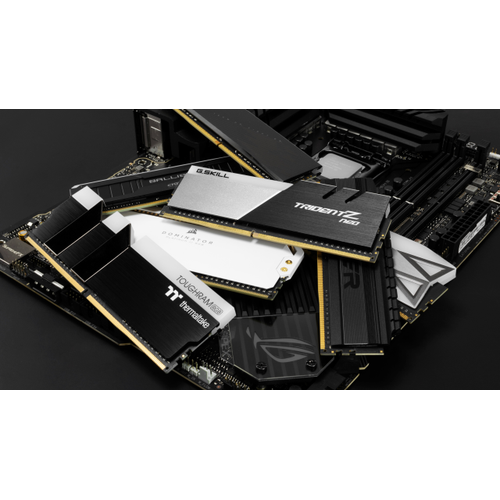
Selecting the right DDR5 RAM for gaming in 2025 requires balancing speed, latency, capacity, and budget to achieve the best performance without overspending. Below are the key insights every gamer should consider when upgrading.
- DDR5-6000 CL30 is a performance/value sweet spot: DDR5-6000 with CAS latency (CL) of 30 offers the perfect balance of optimal gaming performance and affordability. Beyond this point, FPS improvements diminish compared to the additional expense.
- Speed and latency must work together for gaming performance: High frequencies, like DDR5-6400 or higher, do not automatically translate to better gaming performance unless paired with low CAS latency. Kits in the CL30–32 range minimize memory bottlenecks, ensuring faster and smoother gameplay.
- DDR5 outperforms DDR4 in gaming: The leap from DDR4 to DDR5 provides increased memory bandwidth, faster data transfer rates, and better power efficiency, making it indispensable for modern CPUs such as AMD Ryzen 9000 or Intel 14th Gen.
- Plan for the future with 32GB of RAM: While 16GB is sufficient for many current gaming needs, 32GB ensures smoother performance for future AAA titles, multitasking, and streaming across high-demand systems.
- XMP and EXPO profiles simplify optimization: These technologies make memory tuning straightforward, allowing DDR5 kits to achieve advertised speeds with stability, even at higher frequencies.
- CPU compatibility matters for maximizing DDR5: High-end CPUs, such as AMD’s Ryzen 9000 series or Intel’s 14th Gen processors, unlock DDR5 RAM’s full potential by effectively leveraging its speed and bandwidth.
- RGB lighting combines aesthetics and functionality: Many DDR5 kits integrate programmable RGB lighting with efficient heat dissipation designs. Gamers building visually stunning rigs can enjoy both style and utility.
- Affordable DDR5 kits provide great options for budget builds: Entry-level DDR5-5200 or 5600 kits deliver adequate performance for 1080p gaming and older or mid-tier systems with budget-conscious pricing.
In 2025, DDR5 RAM defines the next level of gaming performance. Understanding the right combination of frequency, latency, and capacity will help gamers secure a competitive edge. In the following sections, we’ll explore specific product recommendations and practical considerations for choosing and optimizing DDR5 memory in modern gaming systems.
Introduction
Navigating the complexities of selecting DDR5 RAM for gaming can feel daunting—technical terms like speed, latency, or XMP profiles can confuse even seasoned PC builders. Yet, in 2025, pairing the right DDR5 memory with your gaming setup is essential for unlocking peak performance. Modern DDR5 kits don’t just boost FPS; they optimize overall system responsiveness, reduce stuttering in demanding titles, and future-proof gaming rigs against next-gen requirements.
Whether you’re constructing a flagship gaming PC with a Ryzen 9000 or Intel 14th Gen CPU, or upgrading your current system to stay ahead, the key lies in balancing frequency, CAS latency, and capacity. The right DDR5 kit transforms your gaming experience without breaking your budget.
Let’s delve deeper into the specifications and features of DDR5 RAM, explore top-performing kits, and provide actionable advice for maximizing your investment in performance-driven gaming memory.
Understanding DDR5 RAM Performance for Gaming
As the successor to DDR4, DDR5 offers enhanced bandwidth, reduced power consumption, and superior performance scalability. However, not all DDR5 memory kits are created equal. When buying DDR5 RAM for gaming, understanding how features like memory frequency, CAS latency, and motherboard compatibility impact gaming performance is critical.
Memory Frequency and Gaming Performance: The Sweet Spot
Memory frequency (measured in MHz) directly influences data transfer speed, making it a crucial factor for ensuring high performance in gaming. DDR5 memory ranges from entry-level speeds of 4800MHz to ultra-high-end options exceeding 8000MHz.
- DDR5-6000 with CL30: The Optimal Choice
Analyses and benchmarks demonstrate that DDR5-6000 with a CAS latency of CL30 offers the best combination of high performance and cost for gaming. Enabling XMP or EXPO overclocking profiles easily unlocks these speeds for steady frame rate improvements, particularly in CPU-intensive games. - Case Study: With a Ryzen 9 7900X3D, DDR5-6000 CL30 increased FPS in Cyberpunk 2077 by 10-15% compared to DDR5-4800, yet upgrading to DDR5-7200 only provided a marginal 3-5% improvement for a significantly higher price.
- High Frequencies Equal Diminishing Returns for Gaming
While DDR5-7200 and DDR5-8000 excel in synthetic benchmarks and content creation, the real-world gains for gaming are limited due to increased CAS latency (CL36 or higher) and reduced efficiency in CPU-GPU communication during gameplay. These models are best reserved for professionals in esports or mixed-use systems requiring raw computational power.
Choosing DDR5-6000 CL30 ensures optimal performance per dollar, especially for gamers who prioritize smooth gameplay in demanding AAA titles and high refresh rate monitors.
CAS Latency: The Real Impact on Gaming
CAS latency (CL) measures the delay before memory begins processing an instruction. Lower latency results in faster communication between the RAM and CPU, reducing potential bottlenecks and improving gaming performance.
True Latency and Real-World FPS
- True latency is a combination of CAS latency and memory frequency, often expressed in nanoseconds (ns). Lower true latency minimizes delays during gaming workloads.
- Comparison: DDR5-6000 CL30 (10ns true latency) consistently outperforms DDR5-7200 CL36 (approximately 10.3ns true latency) despite the latter’s faster speed.
- Practical Tip: Gamers should prioritize low-latency kits within their desired frequency range for better gaming performance.
Balancing both CAS latency and memory frequency ensures smoother gameplay and avoids wasting budget on high-frequency modules with negligible real-world benefits.
Capacity Considerations: Is 32GB Necessary in 2025?
With the evolution of gaming engines and larger, more complex AAA titles, the question of RAM capacity has shifted. While 16GB was the gold standard for years, 32GB is gaining traction as the preferred choice for future-proofed rigs.
16GB: Budget Builds and Competitive Gaming
For competitive titles like *Fortnite*, *Valorant*, or *League of Legends*, 16GB remains adequate. These games are lightweight in terms of memory usage, rarely exceeding 10GB during peak multitasking scenarios. Gamers on a budget can still achieve optimal performance by combining 16GB of DDR5 with a mid-range GPU and CPU.
32GB: Essential for Modern AAA Titles
Next-generation games like *Starfield* and *Hogwarts Legacy* easily exceed the 12GB memory threshold, especially at ultra-high settings or when multitasking (e.g., streaming or running additional software). Moving from 16GB to 32GB minimizes stuttering and ensures smoother frame rates.
- Real-World Example: Testing Starfield on a 1440p ultra setup revealed that 32GB of RAM significantly improved gameplay by reducing stuttering in intensive scenes and optimizing loading times during transitions.
In short, 32GB offers better performance scalability, making it an excellent choice for gamers who multitask, stream, or prioritize smooth gameplay in future titles.
Top DDR5 RAM Kits for Gaming in 2025
Investing in the right DDR5 kit can enhance performance across budgets and gaming setups. Here are standout recommendations for a range of needs:
1. Kingston Fury Beast RGB DDR5-6000 CL3
- Most balanced for gaming: Exceptional performance at DDR5-6000 CL30 with RGB lighting for aesthetic builds.
- Ideal for: Mainstream gamers pairing Ryzen 9 or Intel 14th Gen CPUs.
2. G.Skill Trident Z5 RGB DDR5-7200 CL34
- For Enthusiasts and Pros: High frequencies and superior overclocking headroom for cutting-edge rigs.
- Ideal for: Esports professionals or mixed-use systems demanding extreme bandwidth.
3. Crucial DDR5-5200 CL42
- Budget-Friendly: Affordable performance for mid-range systems or first-time DDR5 users.
- Ideal for: Entry-level gamers focused on competitive titles in 1080p.
DDR5 vs. DDR4: Is the Switch Worth It?
DDR5’s advancements in speed, efficiency, and next-gen compatibility make upgrading essential in 2025, especially for gamers using the latest CPUs and GPUs. Benefits include:
- Double the bandwidth for better multitasking and smoother 4K/1440p gaming.
- Future-proofing with support for advanced features like on-die ECC and higher capacity modules.
- Improved multitasking capabilities for streamers or power users running concurrent workloads.
Overclocking and Compatibility Tips
To ensure optimal performance:
- Enable XMP/EXPO profiles to achieve rated speeds.
- Verify motherboard support for high-frequency modules.
- Test system stability using tools like MemTest86 after adjusting settings.
Conclusion
In 2025, DDR5 RAM is the cornerstone of modern gaming systems, offering unparalleled speed, bandwidth, and future compatibility. For most gamers, DDR5-6000 CL30 provides the perfect balance of performance and affordability, while enthusiasts may explore advanced kits for niche scenarios. Additionally, opting for 32GB of RAM prepares builds for the ever-increasing demands of AAA gaming and multitasking.
Future-proofing your system with DDR5 ensures unmatched gaming performance and positions your rig to tackle the challenges of next-gen titles for years to come.